
Tajikistan entry rules for South Korean travellers
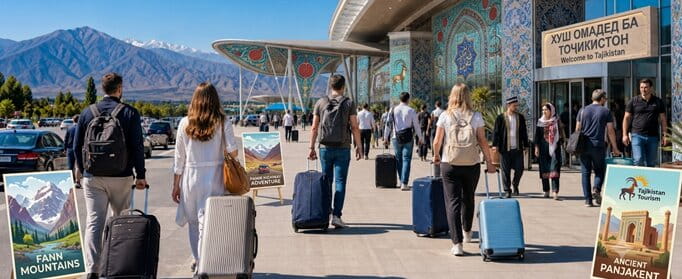
Tajikistan is a favourite of Korean hikers and adventure travellers who want the Pamir Mountains, the Fann Mountains and the legendary Pamir Highway without the crowds. It is remote, affordable and full of surprises. The first thing to sort out is your entry permission, because the rules depend on your passport type. This guide explains the visa requirements for South Korean nationals, the eVisa process and the practical details you should prepare before you fly.
This guide is written for travellers on a South Korean passport. It covers visa-free entry requirements, eVisa application, the GBAO permit for the Pamirs, safety advice, currency, SIM cards, flights from Seoul, and embassy assistance.
Quick answer: Visa status for South Korean visitors
For South Korean passport holders, Tajikistan visa requirements are:
- Visa required? Visa-free reported for ordinary passports (up to 30 days), but verify with official sources. Diplomatic/service passports have separate rules.
- eVisa needed? Yes if visa-free does not apply, for stays over 30 days, or to visit GBAO/Pamirs.
- Stay limit: Up to 30 days visa-free (if applicable), or up to 60 days with eVisa.
- GBAO/Pamirs: Separate GBAO permit required ($20 USD) if visiting Gorno-Badakhshan.
- Entry points: Airports in Dushanbe and Khujand; land borders with Uzbekistan and Kyrgyzstan.
Document requirements for South Korean citizens
When traveling to Tajikistan, South Korean citizens should carry the following documents:
- Valid Passport: South Korean passport valid for at least 6 months beyond intended departure.
- Proof of Stay: Hotel booking confirmation or local host invitation letter.
- Sufficient Funds: Cash (USD, EUR, or Somoni) or card statement for daily expenses.
- Return / Transit Ticket: Proof of onward travel (for air arrivals).
- GBAO Permit: Printed permit if visiting the Pamir region (not required for visa-free entry unless entering GBAO).
Key travel conditions: Purpose of visit includes tourism, family visits, short transit, or official business meetings. Verify passport type and corresponding visa rules before departure.
eVisa application & visa-free rules
Important: Verify Visa-Free Status
Many travel sources report visa-free entry for ordinary South Korean passports for up to 30 days, but others say an eVisa is required. Always confirm with the Tajik Ministry of Foreign Affairs and the Korean embassy before booking tickets.
When Do You Need a Tajikistan eVisa?
If you want to stay in Tajikistan for more than 30 days, if visa-free entry does not apply to your passport type, or if you plan to visit GBAO (the Pamir region), you must apply for an electronic visa (eVisa) online before you travel.
| Category | Visa-Free Entry | Single-Entry eVisa | eVisa + GBAO Permit |
|---|---|---|---|
| Max Stay Duration | Up to 30 Days (if applicable) | Up to 60 Days | Up to 60 Days |
| Official Visa Fee | Free ($0 USD) | $50 USD | $70 USD ($50 + $20 GBAO) |
| Processing Time | Instant (At Border) | 2 – 5 Business Days | 2 – 5 Business Days |
| Application Portal | Not Required | evisa.tj | evisa.tj |
Step-by-Step Online eVisa Application
- Access the official portal at evisa.tj.
- Enter your information exactly as it appears in your South Korean passport.
- Select GBAO region if you are going to Khorog, Murghab, or the Pamir region.
- Upload a clear scan of your passport page with your photo and details.
- Pay using a Visa or MasterCard.
- Download and print your eVisa PDF when you receive it by email.
Tajikistan travel safety advice for South Korean visitors
Most visitors travel without trouble, but the border areas deserve respect, especially near Afghanistan. Before departure, read the current travel advisory from Korea's Ministry of Foreign Affairs, available on the 해외안전여행 (0404.go.kr) website, and avoid regions marked with restrictions. Carry a copy of your passport, stay out of sensitive border zones, and travel with a licensed local agency in remote areas. Register your trip with the Korean authorities and check the advisory again before you fly.
Using Korean bank cards, cash and currency exchange in Tajikistan
The local currency is the Tajikistani somoni (TJS). Korean cards may work at some hotels and ATMs in Dushanbe, but acceptance is patchy, and mobile payment apps should not be relied upon. Bring US dollars in clean, undamaged notes and exchange them at banks or licensed exchange offices. Carry more cash for rural areas and mountain routes, and tell your card issuer about your travel dates.
Korean SIM cards, roaming and internet access in Tajikistan
International roaming from Korean carriers is convenient but can be expensive, so compare data packages or an eSIM before leaving. A local SIM is cheaper and can be bought in Dushanbe with your passport. Foreign phones may need to be registered when you bring them into the country, so ask the seller or your hotel. Mobile coverage disappears in remote mountain areas, so download offline maps and a translation app.
Korean food and meal options during a Tajikistan visit
Do not count on finding Korean restaurants outside the capital. Dushanbe has international and Asian restaurants, and you may find a few Korean options, but availability changes. Local dishes such as plov, samsa, lagman noodles and fresh bread are filling and easy to enjoy. If you are staying longer, bring favourite sauces, instant meals or snacks, and check supermarkets in Dushanbe for rice and noodles.
Flights from Seoul to Dushanbe: Connections and transit preparation
Direct Seoul–Dushanbe flights are generally not available, so plan for at least one stop. Common connections run via Istanbul, Tashkent or another regional hub, with total journeys of roughly 10 to 16 hours. Leave enough layover time, check whether your connecting country requires a transit visa, and verify current schedules directly with the airlines before booking.
South Korean embassy assistance in Tajikistan
If you lose your passport or face an emergency, contact the Embassy of the Republic of Korea in Dushanbe. The embassy publishes travel and entry guidance for Korean citizens on its official website. Save its current contact details and the Korean MOFA consular call centre number before departure, and keep digital copies of your passport and eVisa. Travel insurance with medical evacuation is strongly recommended.
FAQ — Tajikistan visa for South Korean citizens
Answers for common searches about Tajikistan entry requirements for South Korean citizens and passport holders.
Do South Korean citizens need a visa for Tajikistan?
Many sources report visa-free entry for ordinary passports for up to 30 days, but others say an eVisa is required. Confirm with official sources.
What about diplomatic and service passports?
Tajikistan lists these separately, so check the specific arrangement.
How much does the eVisa cost?
About 50 USD for a single entry, or about 70 USD with the GBAO permit. Check the official portal.
Do I need to register in Tajikistan?
Registration rules vary by visa type and length of stay. Ask your hotel and verify with official sources.
Can I use Korean cards and phone data?
Acceptance is limited. Carry cash and consider a local SIM or eSIM.
Related guides for South Korean travellers
- Eligible countries — full visa exemption/eVisa list
- GBAO permit & Pamirs travel — requirements for Gorno-Badakhshan
- Tajikistan visa requirements — general entry rules
- Tourist eVisa — 60-day stay and 90-day validity
- Application procedure — six-step walkthrough
- Border points — where you can enter
